The Rising Tide of Commercial Bankruptcies
How It’s Eroding Creditor Collection Percentages and Why Time Is Your Worst Enemy
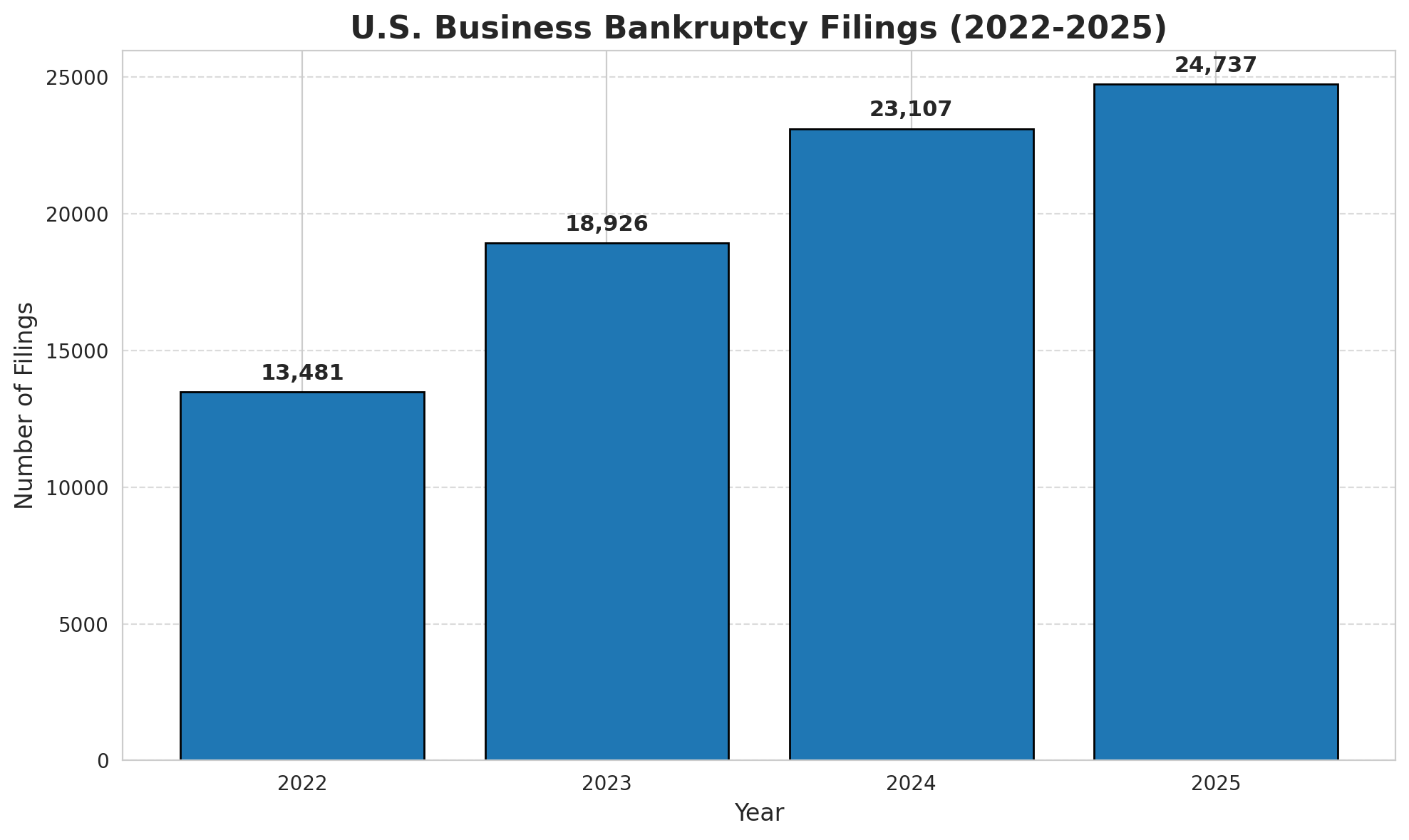
In an economy still navigating high interest rates, supply chain pressures, and shifting market conditions, commercial bankruptcies have surged. According to U.S. Courts data, business bankruptcy filings reached 24,737 in the year ending December 31, 2025 — a 7.1% increase from 23,107 in 2024 and a dramatic rise from 13,481 in 2022. uscourts.gov +1 Other industry trackers, including Epiq and the American Bankruptcy Institute, report commercial filings up approximately 5% year-over-year to 31,810 in calendar year 2025, with Chapter 11 reorganizations and small business Subchapter V cases also climbing.
epiqglobal.comFor creditors, suppliers, and businesses holding accounts receivable, this uptick isn’t just a headline — it directly hits collection percentages. When a debtor files for bankruptcy, the automatic stay immediately halts most collection efforts. Creditors must navigate the bankruptcy process, often filing proofs of claim in a system where unsecured creditors frequently recover only pennies on the dollar.
The Direct Hit: Lower Recovery Rates in BankruptcyUnsecured creditors (the most common position for trade suppliers and service providers) sit low in the priority ladder. In Chapter 11 cases — the reorganization route many commercial debtors choose — average recoveries for general unsecured claims have historically ranged from 30–50% in some studies, but recent leveraged finance reports show even lower outcomes, sometimes 10–35% or less depending on the case. Overall commercial debt collection agencies report average recoveries around 20–30 cents on the dollar, and bankruptcy-related debts drag those figures down further. kaplancollectionagency.com +1The surge in filings means more debts are entering this low-recovery environment. Early 2026 data already shows the trend continuing, with business filings up in the 12-month period ending March 2026.
debt.orgWhy Time Kills Collection Percentages: The Aging Receivable EffectBankruptcy isn’t the only factor — the longer any receivable sits uncollected, the steeper the drop in recovery odds. Industry benchmarks show a clear, precipitous decline:
-
- 0–30 days past due: 95–97% collectibility
-
- 31–60 days: 80–90%
-
- 61–90 days: 60–75%
-
- 91–120 days: 30–40%
-
- 121–180 days: ~20–30%
-
- 181+ days (6+ months): Often 10–25% or lower, dropping below 10% after 12–24 months. leibsolutions.com +1
With bankruptcies rising, debts that might have been collected early are increasingly getting caught in prolonged proceedings or written off entirely. One analysis tracking recent quarters showed average recovery rates falling from ~48.6% to ~36.9% as average debt age climbed from 6.2 to 9.0 months alongside higher filing volumes.
burtcollect.com

These numbers aren’t abstract — they translate directly into cash flow pain for businesses. Every extra month a receivable ages without action compounds the risk, especially when the debtor ultimately files.What This Means for Businesses and Legal ProfessionalsThe combination of more bankruptcies and rapidly declining collection success rates creates a perfect storm. Creditors face:
-
- Automatic stays freezing collection activity
-
- Lengthy bankruptcy timelines (often 17+ months for Chapter 11, sometimes years)
-
- Lower priority payouts after secured creditors and administrative expenses
-
- Higher overall write-off rates as bad debts mount
Practical Steps to Protect Your Recoveries
-
- Act early — Place debts with collections or legal counsel before they hit 60–90 days. Early intervention dramatically improves outcomes.
-
- Monitor for bankruptcy signals — Watch for late payments, communication breakdowns, or public filings.
-
- File claims promptly in bankruptcy proceedings to preserve your position.
-
- Leverage specialized legal support — Experienced attorneys can navigate proofs of claim, objections, and potential adversary proceedings to maximize recovery.
At Belmont Knight, our cloud-based legal marketplace connects businesses and creditors with attorneys who specialize in commercial collections, bankruptcy claims, and litigation financing. Whether you need to post a project for competitive bids, access quick financing for legal costs, or manage ongoing cases with our litigation tools, the platform is designed to help you respond faster and recover more — even in challenging economic times.The Bottom LineThe uptick in commercial bankruptcies isn’t slowing down, and neither is the erosion of collection percentages as debts age. Businesses that treat receivables proactively — with the right legal tools and expertise — stand the best chance of protecting cash flow.Stay ahead of the curve. Explore Belmont Knight’s marketplace today for attorneys, financing, and resources built for the realities of modern commercial debt recovery.Ready to optimize your collections strategy? Visit www.belmontknight.com to post your next legal project or connect with specialized counsel.